Mustafa Kemal Ataturk – The father of the Turks
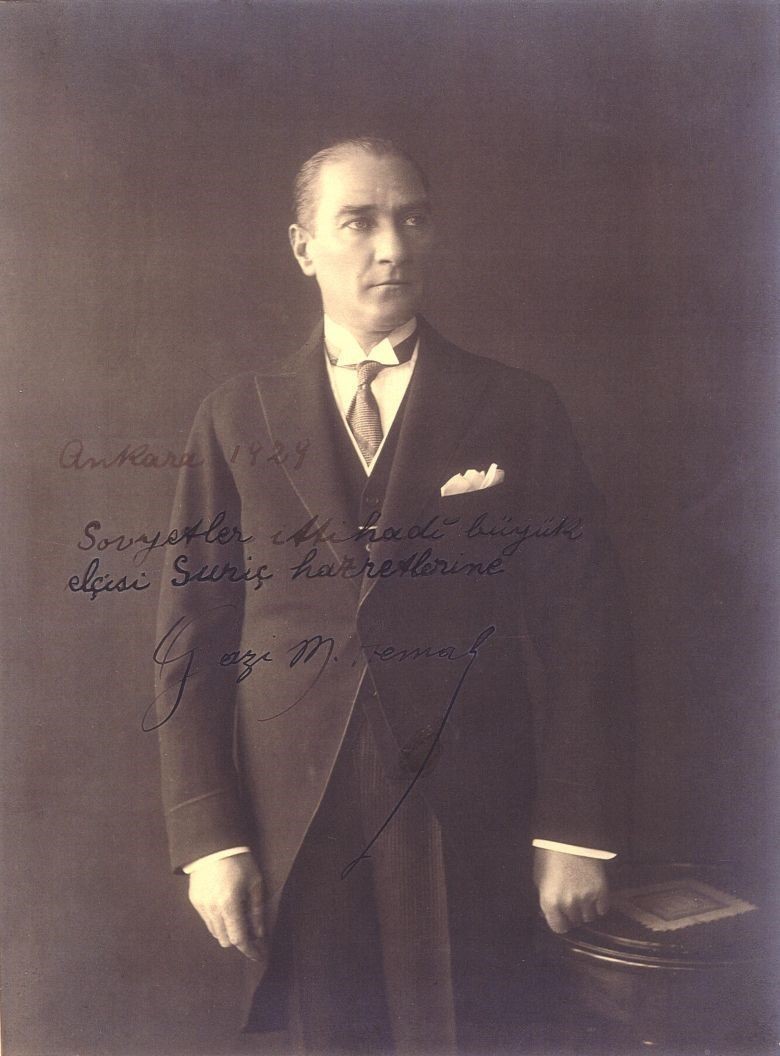 Mustafa Kemal Ataturk is popular in Turkey like no one else before him or after him. Cuddly, loved, worshiped – This is the little said. Anyway, we will come across it very quickly after arriving in this country. If we don't come across his portrait in the first store, place or hotel, we can get suspicious, that we are probably not in Turkey. Every metropolis, The city and the village are decorated not only by Kemal monuments, But all of them will also include the street named after his name. Poles may be a bit associated with the last regime, But even in communist Poland, we did not worship Lenin as many idolatry as the Turks of the founder of the Republic (He has his mausoleum in Ankara) This can only be compared to relations prevailing in this regard in the USSR. But this man was fundamentally different from his – Let's say – Russian counterparts, We can compare it more with Józef Piłsudski. Played a significant role in the history of Turkey, releasing her from the occupation of foreign countries and introducing democracy, which changed the country's profile, leading him from a complete disaster to relative prosperity.
Mustafa Kemal was born as the son of a clerk in 1881 r. in thessaloniki, which the city was then to the Ottoman Empire. He graduated from a military school there and joined the ranks of younger conspirators, but quickly unmasked, He was sent to Damascus, which cut him out at first from active actions. He started his military career, which enabled him later (1909) acting as a staff officer in the army of act, armed arm of the youthful movement.
Then he took part in a campaign against Italy in Tripoli and battles on the Balkan Peninsula, But he showed his abilities only during the Gallipoli fights in 1915 r., which he successfully defended against the British. Then he also received the division command, Then he was appointed brigadier, and a year later he received the title of feed (general). After Gallipoli, he took part in the fight against the Allies in Syria, And after losing World War I, the Sultan appointed him an army inspector in the east of Anatolia (He was to supervise the disarming of Turkish soldiers and suppress numerous uprisings), to which Kemal immediately set off with the intention of acting resistance to the power of the country to the powers and the flowing Greeks. Took over the chairmanship in the liberation war and within a few years, After heavy and bloody struggles, not only led to the displacement of foreign countries (1923), But the idea of liberalism has long been steeped in, also proclaimed a new state in the same year – Turkish Republic.
Kemal became the first president of the Republic and managed it through the next 15 years, conducting radical reforms sometimes, which caused him many opponents, But even more supporters. His political activities were called kemalism, which meant the development of Turkey in the shape of Western Europe, transforming it into a modern state. They belonged to the main principles of kemalism: laicyzm (separation of the state from the church), nationalism, republicanism, populism (In the sense of close cooperation between the state and the people), etatism (state interference in economic life) and reformism, that is, the Europeanization of Turkey. Of all of the above, he caused the Atatuat a secularism, which he agreed to the traditional foundations of the Turks' life – islam. Liquidation in 1924 r. Caliphate led to many armed speeches, Especially in the orthodox Eastern Anatolia. Then the Kurds also came to the fore, And the bloody suppression of their uprising has begun the ongoing conflict today. Despite these or other irritations, the Turks saw their savior in Kemal, which became apparent in 1934 r., When the parliament gave him the nickname Ataturk – "Father of the Turks”. W 4 years later, 10 November 1938 r., The creator of Nowoczesna Turkey died in Istanbul, and his body was transported to the new capital, Ankary, where in 1953 r. A mausoleum was created. Kemalism has generally survived in Turkey to this day, And only offensive full -time was withdrawn in the benefit of limited control over the most important branches of industry. Besides, stigmatized in the years 20. i 30. Islam was reborn shortly after the death of Kemal Mustafa. The most important legacy of those days is probably nationalism, whose Ataturk was a great supporter. He is expressed in Kemal's words known to each Turks: Happy turkum (How happiness it can be said: I'm Turkish). Wandering around Turkey, Let's remember about great respect, which Ataturk is given in the whole society, And let's not speak our negative courts with the sometimes exaggerated glorification of his person.