 HISTORY
The first traces of the presence of people in the Danube Valley come from Paleolithic, as evidenced by the statue of Venus from Willendorf found in this area, whose age is determined by 25 thousand. years. W 1991 r. At the foot of the glacier in the Oetztal Alps, the body of the man from the late Stone Age was discovered (tooth. Tomb's Ice Frame in the Tyiol chapter). When in and in. p.n.e. Romans came to this place, There were already Celtic settlements here, founded around 500 years earlier by galas wandering to the east. For a long time the Celts were involved in the extraction of salt in Hallstatt and trade along the Alpine routes from north to south. The Romans founded settlements in the area from Brigantium (Ravage) Do carnun-then (Petronell), lying 40 km east of the military camp known as Vindobon (later Vienna). The northern border of the Empire was marked by the Danube, called in Roman times Danuvius. It was a natural barrier for the Germanic tribes from the north.
W V w. n.e. The Roman Empire collapsed, and the Romans were defeated by the braces coming from the north.
Danube valley, which is an important place of crossing on the East-West Trail, attracted more waves of warrior tribes, trying to get control over these areas. Teutoni lived before and in the Romans, Slavs, Huns, Gos, Franc, Bavarians, Avars and Madziarowie. In VII in. The territory between the Eastern Alps and the Vienna Forest was controlled by the competing Bavarians and Slavs (The latter came from the southeast).
Karol the Great
Karol the Great, King of Franks and the Roman Emperor, having overcome everyone, who stood in his way, w 803 r. n.e. made the Danube Valley the Border Province of his Empire – Eastern March (Ostmark). It was west of Vienna and was limited by rivers: Anisa (Enns), Rab (Raab) and Drawa. After the death of Charlemagne in 814 r. The Caroling Empire has been divided into three parts, and the Eastern March was taken by the Madziarne tribe (Hungarians).
When Otton and the Great, exercising control over the eastern part of the old Caroling Empire, defeated the Madziarów in the battle of the Lech River (955 r.), Marchia Wschodnia została odbudowana. Seven years later, Pope Jan XII crowned Otto as the emperor of the Roman Empire of the German nation. W 966 r. The first mention of Ostmark as Ostarrichi appeared, which name is similar to the current name of Austria – Austria.
Babenbergowie
W 976 r. Margrave's dignity (German noble title higher than the count) Eastern March was received by Leopold von Babenberg, A descendant of the noble Bavarian family. Babenbergs gradually expanded their influence, Occupation in XI in. Vienna and a significant part of today's Lower Austria, and in 1192 r. By selecting Styria and a large area of upper Austria. It was also a period of lively trade and economic flourishing. W 1156 r. Roman emperor Fryderyk Barbarossa gave Babenberg the prince's title, and the head of the family, Henryk II, He established his permanent residence in Vienna.
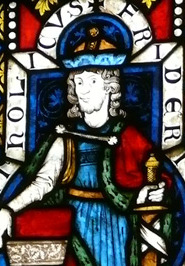
W 1246 r. in the battle with Hungary over Lithuana (at the Austrian-Hungarian border) The last male descendant of the family was killed, Prince Fryderyk II. Shortly afterwards all Austria, as an easy magnifying glass, She got under the control of the later King of the Czech Otokar II. This ruler, prevailing in a huge area (from the Sudetes, at the northern borders of today's Czech Republic, up to the Adriatic), he refused to pay tribute to the new Roman emperor Rudolf and Habsburg. He paid for it with his life, because in 1278 r. He died in the battle with his powerful opponent under dry bars (in the Moravian fields). W 1282 r. Rudolf and gave his two sons Austria and Styria in Lenno and at that moment began to last until the beginning of the 20th century. Habsburg rule – one of the most powerful dynasties in the history of Europe.