Last name: Wyspiański
Name/names: Stanisław
Also known as:
Born: 15 styczeń 1869 (Cracow, Poland)
Died: 28 November 1907 (Cracow, Poland)
Category: Literature.
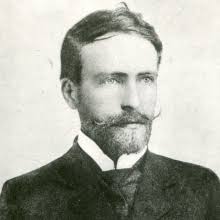
Stanisław Wyspiański – He was born 15 And 1869 r. in Krakow, He died there, 28 XI 1907 r. His father, Francis, He was a sculptor. Stanisław from 1880 r. He grew up with relatives. He attended the Junior High School. Anny. W 1887 r. He started painting at the School of Fine Arts in Krakow. In the years 1887-1890 and 1896-1897 He attended the Jagiellonian University, where he listened to lectures on the history of history and literature. W 1890 r. he traveled through Italy and Switzerland to France, and from there to Germany and Czech Prague. In the years 1891-1894 He was in Paris three times. During this period he painted a lot, and at the same time he devoted more and more attention to the theater. In August 1894 r. He returned to Krakow. He established cooperation with the City Theater. Initially, he worked in the theater as a painter-donor, But he quickly developed his dramatic work. W 1902 r. He became an assistant professor of the Academy of Fine Arts, and in 1905 r. – councilor of the city of Krakow. He belonged to the initiators of applied art, designed interiors and furniture. About a year 1905 He fell hard on health and settled in Węgrzce near Kraków. He was buried in Skałka, in the crypt of the distinguished.
He was one of the main creators of a breakthrough in Polish art on the border of the 19th and 20th centuries. At the same time, he was in his staging concepts a real reformer of the Polish theater and drama. His early dramatic works were created under foreign influence. However, almost from the very beginning of the dramatic creativity, Wyspiański sought to create a monumental drama, maintaining the tradition of great romantic drama. The writer reached into topics and problems rooted in the Romantic era, He also introduced the figures of great romantic creators on the stage. Stock mainly during the period of political captivity, national myths appear in Wyspiański's dramas next to the great myths of Mediterranean culture, mainly ancient Greece. In the dramas written in later years, his own interpretation of human fate comes to the fore, accepting the irreversibility of destiny, The inevitability of the evil accompanying human deeds, The ideal of heroic attitude as the only one necessary in the struggle with fate. He also developed historical reflection on the history of the nation in their legendary beginnings (Legend, Bolesław Śmiały). He appointed architecture to cooperate in creating theater works, painting, music, Word and acting. His dramas have a multi -heavy structure. Together with other forms of creativity, lyrical poems were also created: melancholy, reflective, ironic, having the nature of personal confessions. His best -known works include dramas: Wedding reception, Varsovian, Release, Lelewel, November night i Return Odysseus. In addition, Wyspiański is the creator of stained glass in the Wawel Cathedral and in the Franciscan church in Krakow