Romuald Minkiewicz
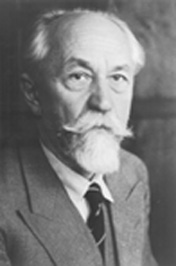
An outstanding biologist with a recognized reputation, fertile poet and playwright, activist of the Polish Socialist Party, tireless speaker of the folk universities, free -lived propagator, A publicist boldly proclaiming his own opinion – It's just part of it, What can you say about Romuald Kazimierz Minkiewicz. He was born in Suwałki 27 January 1878 year. He was the son of Kazimierz from Filipów, tax clerk and Karolina née Michałowski, Henry's brother. He studied in Augustów, He attended the junior high school in Ma-Riampol. Sheds 1895-1900 He studied biology at the University of St. Petersburg. Early associated with the socialist movement, for what he was arrested and imprisoned in 1899 i 1902 year. From 1900 do 1904 year he was an assistant to the University of Kazan on the Volga – Scientific work was not enough for him, organized university courses for Polish women, He participated in Polish cultural events, writing literary works for their needs.
In his youth, he was mainly occupied by a water fauna. Conducted hydrobiological observations in freshwater stations (Boologoje, 1898) and sea (Sewastopol, 1899; Yillefranche, 1902-1904; Banyuls, 1903). He did 1904 year. We know, that in autumn 1903 year and in 1904 he stayed in Krakow for the year, probably more in connection with the underground activity than the scientific, because in 1905 year he cooperated in Warsaw with the PPS body “Daily courier” and participated in the activities of the Combat Organization of the Polish Socialist Party. In August 1905 year he was imprisoned in the 10th pavilion, then he went to Paris as an agent of the Polish Socialist Party. From 1905 do 1925 of the year, he announced political articles in “Worker”. The organizational relationship with the party loosened, When Minkiewicz devoted himself to science.
Lata 1905-1916 He spent between Western Europe, where he worked in hydrobiological stations, and Zakopane and the surrounding area, where he often hosted saving threatened health. He conducted biological observations at Yillefranche sea stations (1905-1906), Roskoff (1906-1907), Monaco (1900) and in Paris and Brussels. He published research results in several languages in various scientific bulletins. From early work on disharmonies in human nature, About natural death and the so -called. death instinct (Critical remarks over the book prof. Swordfish) (Warsaw 1905), revealed his main feature of the scholar – Criticism and independence of views. He especially dealt with animal conditions for lights and colors. Literary creativity gave him respite. In one of the poems he wrote, that it already has enough “greedy scientific issues”. Thanks to the dating of some songs, we can today combine the subject of Minkiewicz's scientific and literary works, observe the tips of creative power and doubt. A picture of a man with multilateral interests emerges from them (For example, Hindu and Japanese culture) and a lot of literary erudition; at the same time – man longing for a mother and experiencing emotional dilemmas.
Autobiographical drama Lucyan (1911), referring to the revolution 1905 year, It contains an explanation of the causes of a poet's reserve towards the activities of the Polish Socialist Party. He wrote there: The currents of party policy are only faint, and the purpose of progress is the only one and forever conscious: human soul, Liberation of human souls. This idealistic and romantic, taken from the king-of Juliusz Słowacki, Minkiewicz tried to implement the program in practice. Based on the philosophical indications of Edward Abramowski, belonged – Together with the brothers Dionysia and Józef Bekami, Julian Kowalczyk and Władysław Orkan – to the so -called spiritual communism. Zakopane-Poronińskis “brothers” it soon fell apart; Minkiewicz's private letters and program brochures remained: About the full life and about the spiritual communion (Cracow 1907) and the ideal and the life of a socialist(Cracow 1908).
Minkiewicz, member of OB PPS, He was able to glorify the active underground activity: We are not in the grand lightning, Like a huf knights / But in the basement and in the basements of the Żagwia faith in the pupils, whispering brave words.
Minkiewicz, member of the spiritual communism, stated: I live on the cult of brotherhood (…), I live staring at the friendship. The lyrical and dramatic creativity of the author from before the war testifies to the strong influence of J. Kasprowicz, S. Wyspiański and T. Miciński. Its expression was a critical study of the land and mortgage registers of the longing (Warsaw 1910) and volumes of poetry and dramas: Royal sea (Warsaw 1911), By the Sea (Warsaw 1911), Love lists and songs (Vilnius 1922). Typically, Młodziejska, the subject of these songs did not bring him special recognition of criticism, Although it is worth paying attention to the attempts of songs in French and German and in various musical and symbolic ways of expressing spiritual content.
In reborn Poland, Minkiewicz joined the editing “Worker” (1918-1919), However, he mainly dealt with science. From 1918 do 1939 of the year he was a professor of biology of free Polish universities in Warsaw, Director of the institute of the name M. Nencki (1926-1931), co -organized a hydrobiology station on Lake Wigry. Announced a number of popularizing and scientific works in the field of zoology, focusing mainly on the issues of a neurophysiologist. The results of his studies on the life of ants burned in the Warsaw Uprising. As a publicist, he demanded independence in preaching scientific truths (Dogmatism and authority in science and teaching, 1927; Why I accepted the dignity of a member in TOW. Scientific Warsaw, 1934) and opposed the sense of shoes and triumphalism in the bosom of PPS (Click Warsaw OK PPS, 1928). W 1920 the year was organized in Warsaw by the Polish Freeting Association, He was the chairman of the non -denominational commune in the capital and the longtime editor “Free thoughts” and “Polish freedoma”. Died 24 August 1944 year in Warsaw.