May resolutions
 The anti -German underground of nationalists focused mainly in 4 bonfires or groups "Elu": Warszawska, Lublin, Krakowska and Lviv. The main activists were: Dr. Zbigniew Paderewski, Juliusz Zdanowski, Stefan Surzycki, Stanisław Rymar, Stefan Dąbrowski, Zdzisław Próchnicki, Aleksander Skarbek. Vilnius cut off the iron curtain of Prince Isenburg suffered in isolation. Poznań did not need a league (Although he also had his eliists): The local society felt in all-Polish from birth, and MPs Wojciech Trąmpczyński, Władysław Seyda, Wojciech Korfanty defended not only their voters in the Reich parliament., But the rights of the whole nation, In particular, stigmatizing Germanization pressure in the entire Prussian partition [to] citizens, which at the same time was sent to death for the matter of persecutors. Poznań Zofia Sokolnicka tirelessly worked as a liaison officer between the National League and her activists in Switzerland. Thanks to her, the "Passengers" of the country knew about the progress of Dmowski's action and could effectively counteract the propaganda of central states.
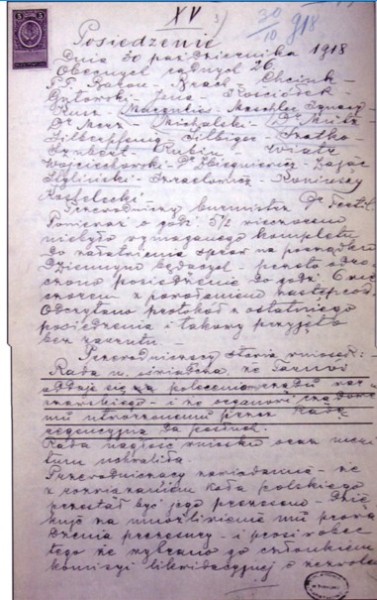
Outside, the league spoke through the National Democratic Party, which gave the direction of the inter -party circle in the congress and the union in Galicia so. By Jędrzej Moraczewski, the league came in contact with the independence wing of the PPS, Therefore, and Daszyński, Although he is very close with Vienna, emancipated from the "central" orientation. Endeces pulled "non -tiny democrats" behind them, by Włodzimierz Tetmajer they acted on the people ("Piastowców"). The latter leadership, Wincenty Witos, counting on the pressure of bureaucracy to peasant masses, He was very restrained by all -Polish ideas. And the most difficult with conservatives from the Bobrzyński school, staring at Burg and Ballplatz. Password […] It came to the All -Polish demands from the Jagiellonian University, when 138 He signed professors and ul. Krakow (16 V) a resolution demanding the United Poland, independent, with access to the sea (what most Lviv professors also supported), A week later, the Polish circle in Vienna repeated this postulate at the request of Tetmajer. A 28 [house 1917 r.] Among the crowds of the Cracow City Hall in the Sejm City Hall together with members of the State Council, breaking the resistance of scared Stańczyk, adopted a memorable resolution: Its main author Stanisław Głąbiński added wishes to the text, that the Austrian emperor would realize the desire of the Polish nation. This tactical maneuver has added a spirits to the emarks, He protected all parliamentarians against accusing of treason, but in fact he was only a good farewell gesture towards Vienna.