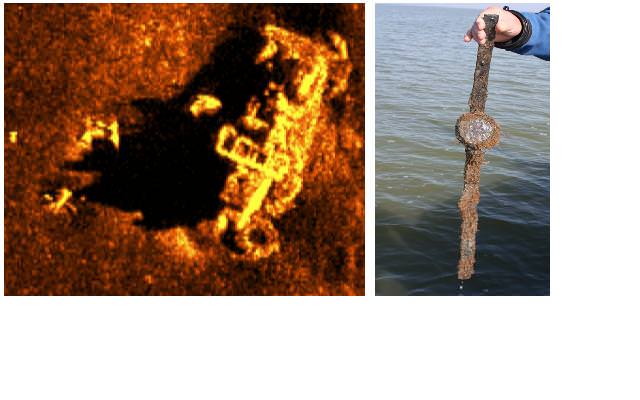
Wrecks in the Vistula Lagoon.
Last fall, Employees of the Maritime Measurement Department, Maritime Office in Gdynia, When conducting hydrographic works on the Vistula Lagoon, detected submarines in May, whose initial identification allowed to determine that they are wrecks of vehicles most likely from the time of evacuation of the population from East Prussia which took place in the last months of World War II.
CMM was notified of the find, which turned to the BalticTech team and the HE TPS section to verify these assumptions.
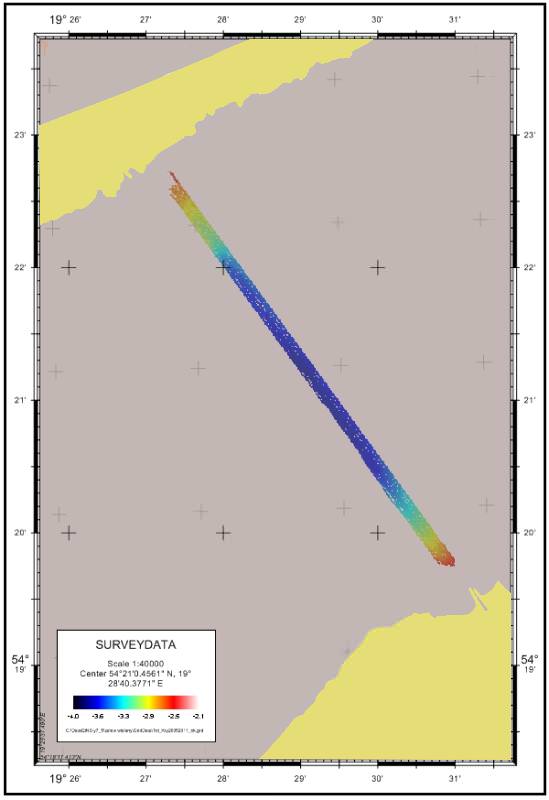
Research area of the Medical University of Tolkmicko - Krynica Morska. Source: Marine office.
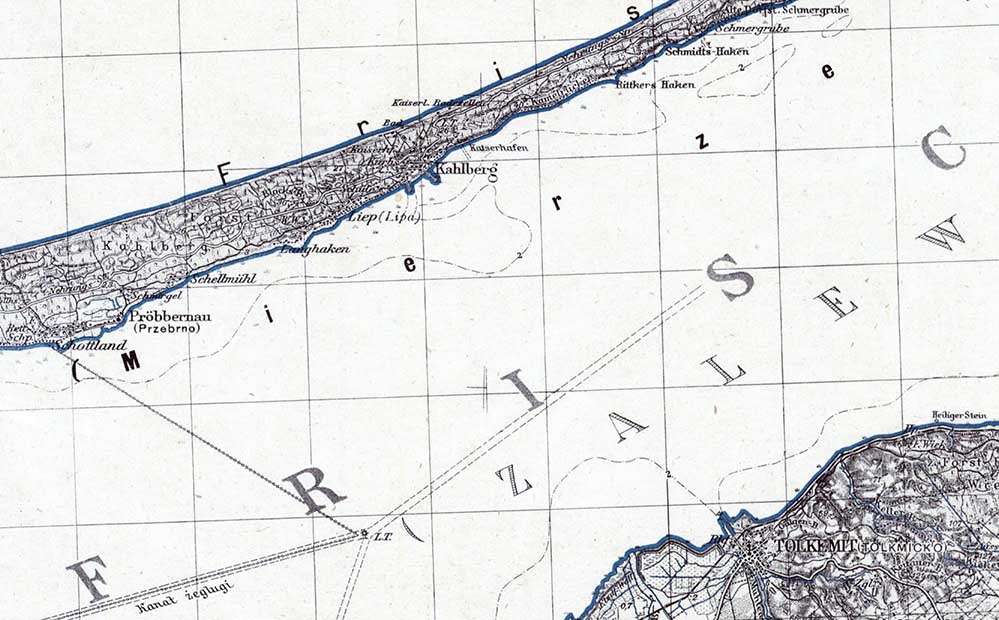
Map of the Lagoon Z 1931 year.
Vistula Lagoon in January 1945.
As a result of the January offensive of the Red Army. Already 23 January The first Soviet tanks reached the road leading to Tolkmicka. Within 2 days, from 23 do 25 January Russian troops cut the German army all land roads leading to forces located on the west side of the Vistula. Meaning that, The lap included forces 3, 4 and partly 2 Army. Probably at this moment the evacuation of soldiers and military vehicles after a frozen Vistula Lagoon towards the Vistula Spit. One of the evacuation routes was the road leading from Tolkmicka to Krynica Morska. Fights for Tolkmicko and its occupation by the Red Army to 26 January 1945 year interrupted the evacuation of troops from the area of this town.
In connection with the above 1945 year.
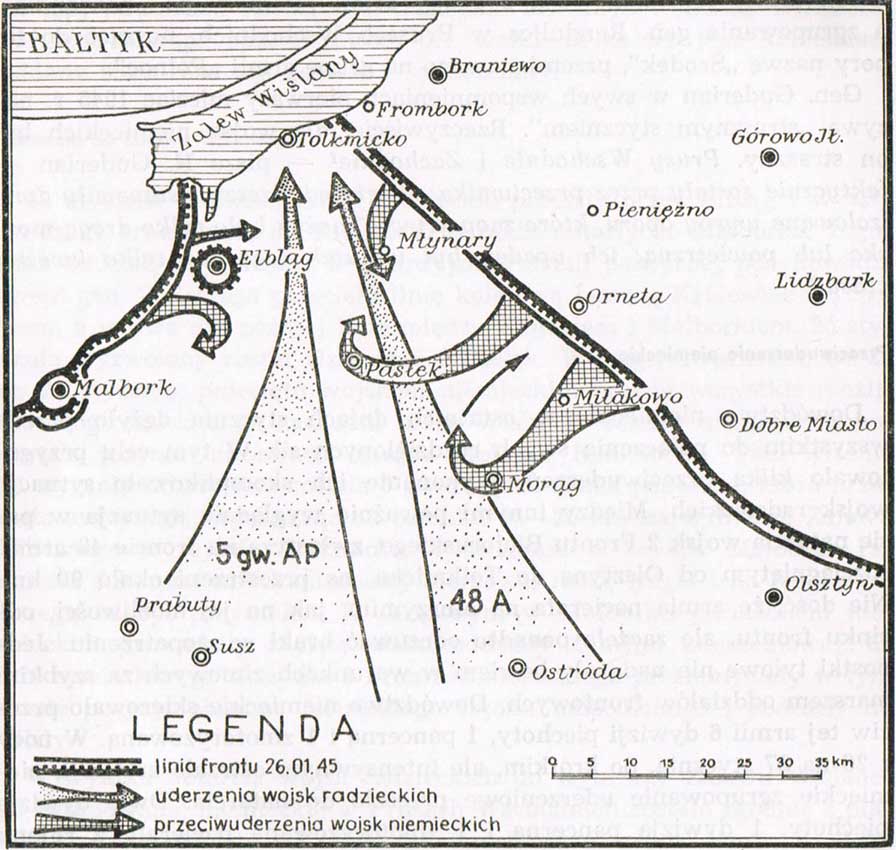
The front of the front in the second half of January 1945. Source: E. Mower, "Liberation of northern Poland 1945", Gdynia 1967.
During the end of the Second War, Wehrmacht had several dozen types of trucks of domestic and foreign production. Each of them was produced in many versions. For example, Opel Blitz car. 305 he had them 137. It should be assumed that each of these vehicles could be found in the region of the Vistula Lagoon at the beginning 1945 year.
Inventory of wrecks
20 September 2011, on board the "Sonar-4" hydrographic unit, led by Mrs. Grażyna Sadłoń, The team set off from Tolkmicka: ONE ( J.GaStwicki, J. Koszałka), BALTICTECH ( T. Stachura, T. Trojanowicz ), CMM ( W. Ossowski) and the Historical and Exploration Section of TPS ( Z. Okuniewski, And Mierzejewski).
Vehicle inventory was largely hindered by the lack of any visibility, Significant distortion of objects and their partial retention in clay ground. Steel elements of wrecks are covered with a layer of crustaceans and rust, preventing the identification of smaller parts. The only elements of the equipment, which have retained the shape are made of plastic (np. battery, steering wheel), tires, glass seals, windows, lamp shades, upholstery from fiberboard or plywood. The sizes of wrecks indicate that we are dealing with trucks with a capacity above 1,5 tony. From among 4 wrecks were recognized 2 Vehicle types. Due to the progressive corrosion, The best -preserved elements of the vehicle can be internal mechanical parts, massive frame elements, partly the chassis and small items made of glass, Plastiku I Gumy.
Wreck 1
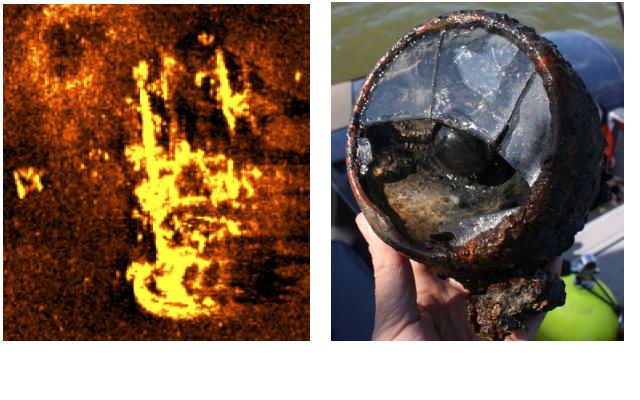
The wreck of a circular vehicle was significantly degraded. In addition to steel elements, wood origin was also found on the facility, Presumably a fiberboard or plywood. On the vehicle there was also a spotlight with a flat lampshade in a copper alloy housing, which was attached to the vehicle via an aluminum or zinc element. Unfortunately, no characteristic elements were found, which would allow even approximate identification of the truck.
Wreck 2
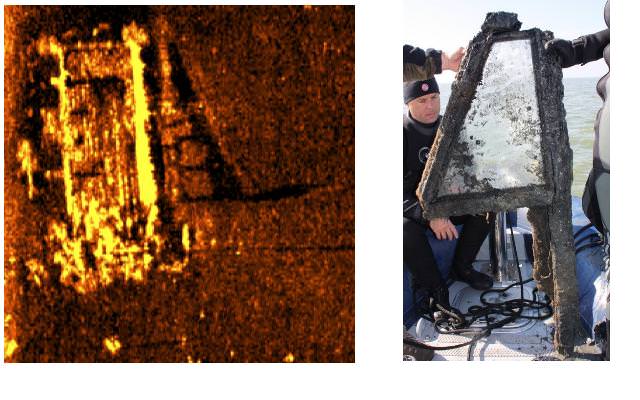
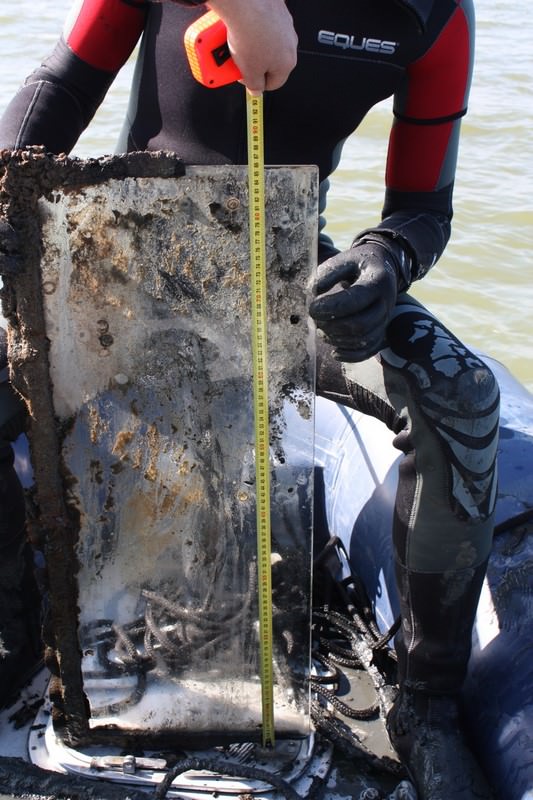
Also in this forfeiture, The wreck of the vehicle has survived only partially. Apart from a large body space, about 2.5m wide, The wheels on both sides of the cabin are also noticeable. Near the vehicle there is a fragment of the cabin structure and one of the front windows, thanks to which the brand and type of vehicle were clearly determined. On the preserved left fragment of the cabin there is an internal grip and mounting of the door hinges, which adjacent to him. In addition, the dimensions of one of the front windows and the pressed body structure clearly indicate 3,5 tonową ciężarówkę Renault AHN, which was used by the end of the war by Wehrmacht.
Wreck 3
Of all the wrecks examined, this one seems to be preserved best. During the inspection, a large and rounded element of the body was located. Just before him there is a cab with a preserved steering wheel and a gear shift stick. The steering wheel end is not much lower than the end of the upper plane. Just before entering the cab, The spare wheel is felt on the left, which is clearly visible in the sonar picture. The circle fully protrudes beyond the ground in which the vehicle rests. In addition to the spare wheel, The location of the two rear axes of the vehicle turned out to be an important element of identification. From the ground on which the vehicle rests, The tires stick out only about 10 cm. Dzięki wszystkim znakom szczególnym udało się prawie jednoznacznie określić typ pojazdu jako 3-tonową niemiecką cysternę lotniskową Mercedes-Benz LG 3000 Car. 384.
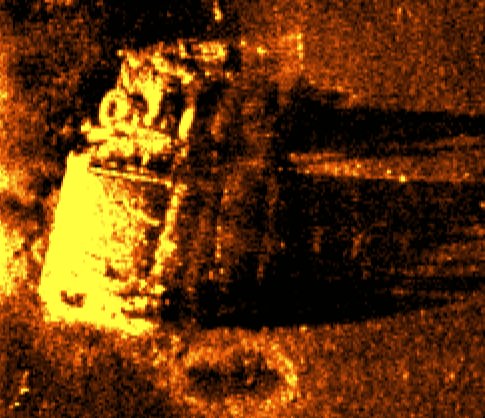
Wreck 4
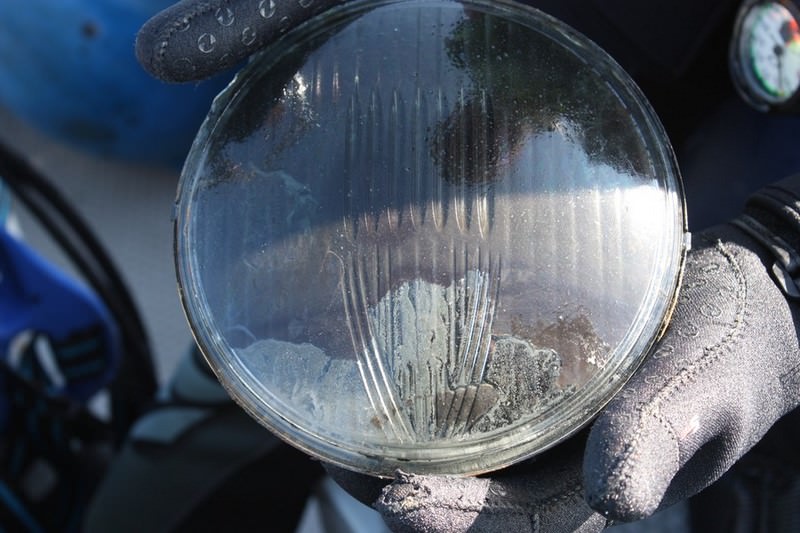
The least is known about the fourth of the wrecks. A lamp with a metal strip found on the vehicle is not characteristic of any of the vehicles. As in the case of the first wreck, there are no elements, which would allow even approximate identification of the truck.