Last name: Nałkowska
Name/names: Zofia
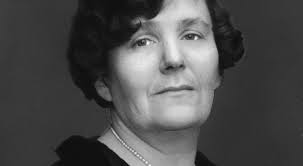
Also known as: Rygier, Gorzechowska
Born: 10 November 1884 (Warsaw, Poland)
Died: 17 December 1954 (Warsaw, Poland).
Zofia Nałkowska – born 10 XI 1884 r. in Warsaw, She died there, 17 XII 1954 r. She graduated from a private salary in Warsaw and attended lectures on the secret University of Flying. W 1904 r. married the poet and educator, L. Back, in the years 1906-1907 She lived with him in Kielce, to the break. 1909 i 1910 r. She lived in Krakow, and later until a year 1922 in Warsaw or at the family home near Wołomin. W 1922 r. She married the commander of the Legion gendarmerie, J. Jura-Gorzechowski. In the years 1922-1926 She lived near Vilnius and in Grodno, where she worked socially in the company of prison care. W 1929 year she returned to Warsaw. W 1929 year she spread with her second husband. Took part in the works of ZZLP and Pen-Club. Organized protests on political prisoners. During the occupation she lived in Warsaw with her mother and sister, running a tobacco shop. She took part in the underground literary life. After liberation, she took part in the work of the Main Commission for the Investigation of the Nazi crimes in Krakow. W 1945 r. She moved to Łódź, where it organized a local committee branch. She traveled around the country with local visions. Weszła też w skład redakcji tygodnika “Ironworks”. W 1945 r. She became the chairwoman of the Polish-French Friendship Society. W 1947 r. She was elected to the Legislative Sejm, and in 1952 r. – to the Sejm. She was also an activist of the Peace Defenders Committee. She was buried in Powązki in Warsaw. In the years 1936 i 1953 She was a laureate of the State Award.
She debuted in. 1898 w “Weekly review” poem I remember, and her first story appeared in 1903 r. w “Links”. Stendhal's works had a great impact on her work, Flaubert and Dostoyevsky. From the very beginning, she dealt with the analysis of the psyche of individual individuals in her works. After 1918 r. continued the analysis, making it in terms of the influence of cultural factors, interpersonal relationships and time passing for human personality development and shaping. At that time, she also gave an expression to her disappointment with the reality of independent Poland. In this phase of development of her work, interest in everyday life and elementary problems related to this existence also dominated. – love, suffering, aging, death.
Her most outstanding works are: powieść Teresa Hennert's affair (1924), dramas Women's House (1930) i The day of his return (1931), Border (1935), zbiór opowiadań Medallions (1946), which became a masterpiece of anti -fascist literature and is the author's appeal for peace. Apart from his literary activities, była też wybitną postacią świata artystycznego i “she gathered around her the most outstanding personalities of Polish culture”.