Last name: Przerwa-Tetmajer
Name/names: Kazimierz
Also known as:
Born: 12 February 1865 (Ludzmierz, Poland)
Died: 18 styczeń 1940 (Warsaw, Poland)
Category: Literature.
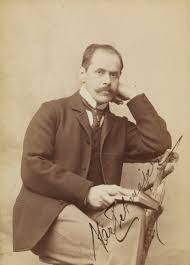
Kazimierz Przerwa-Tetmajer – He was born 12 II 1865 r. in Ludźmierz in Podhale, died 18 And 1940 r. in Warsaw. His father, Adolf, He took part in the November Uprising. After losing their property, the parents moved with Kazimierz to Krakow. Tetmajer studied at the Faculty of Philosophy of the Jagiellonian University, later he went to Warsaw, from where he went to Heidelberg where he started further studies. After returning to the country, he stayed mainly in Zakopane and Krakow. W 1921 r. He was chosen by the President of the Society of Writers and Journalists, and in 1928 r. He was awarded the Literary Award of the City of Warsaw. Over the past several years of his life, mental illness has prevented him from writing. At the end of his life he lost his sight. He died in Warsaw in a tragic leaving and oblivion.
Most of his work are poetic works. He began to write poems during his studies in Krakow. Pierwszy tom jego Poetry ukazał się w roku 1891. In the works contained in this volume, a clear reflection was found by the poet's lively reaction to bloody suppressed workers' strikes. The next collections of poetry set Tetmajer in a row of the most popular poets. In these collections, the author raised vividly interesting people of this era. He preached the cult of Schopenhauer's philosophy and expressed his admiration for Nietzsche, He was fascinated by Indian philosophy. In his work there was a worship for art as the highest achievement of individual and collective life. The cult of love was erected with the cult of art with this author, which we find in its numerous unconventional erotic. Tetmajer also created songs on the subject of the life of the highlander people, in which he praised the beauty of the Tatra landscape. The poet's talent was manifested mainly in the artistic expressiveness of artistic visions, colorful richness, masterful use of moods and the ability to influence the imagination with unusual associations of the impressions of various senses. He also created songs with prose, wśród których wymienić należy cykl nowel On Skalny Podhale (1903-1910), recognized as a masterpiece later, a także pierwsza polska powieść historyczno-chłopska Legend of the Tatra Mountains. He also tried his hand at drama, but his dramas did not get recognition. We include his most famous works: 8 serii Poetry, Hanusia letters, elegię Angelus, opowiadanie Priest Piotr novel Angel of death i Panna Mery oraz dramaty Zawisza Czarny, Revolution i Peephole.