Last name: Staff
Name/names: Leopold
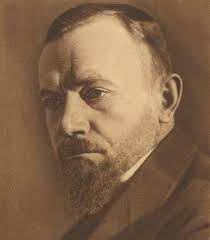
Also known as:
Born: 14 November 1878 (Lviv, Ukraine)
Died: 31 maj 1957 (Skarżysko-Kamienna, Poland).
Leopold Staff He was born 14 XI 1878 r. in Lviv, died 31 V 1957 r. in Skarżysko-Kamienna. In the years 1897-1901 He studied law at the Lviv University of Lviv, and then philosophy and romanology. He was active in the literary circle during this period and took part in publishing an academic magazine in Krakow “Youth” (1898-1899). At that time, he came across, among others. with Nietzsche's writings, which had a serious impact on shaping the attitude of a young poet. He went to Italy many times, in the years 1902-1903 he stayed in Paris, And in the years 1915-1918 in Kharkov. From 1918 r. until the end of the Warsaw Uprising, w 1944 r., and in the years 1949-1957 He lived in Warsaw. He stayed in Pławowice and in Krakow during his subjugate. In the years 1927 i 1951 He was a laureate of the State Literary Award. In addition, he was a laureate of the City of Lviv and the City of Warsaw and the Pen-Club award for translation work. W 1939 r. He received the title of doctor honorary at the University of Warsaw, and in 1949 r. also a title at the Jagiellonian University. His grave is located in Warsaw Powązki.
Already the first volume of his poetry (Dreams about power wydane w 1901 r.) He took a place among the most outstanding Polish poets of the 20th century. Also from the very beginning of his work, the original poetic philosophy began to be shaped by Staff, according to which a constant value is the active pursuit of a man forming himself for unattainable happiness and truth. In his lyrical and dramatic work, this poet showed great interest in philosophical issues and was a consistent defender of the conquest myth. Staff preached the philosophy of order and consent with life. He sought to integrate various currents of European culture in his work, ancient and Christian. He created a beautiful and good man on these foundations, joyful and at the same time who knows the role of suffering. In their late poetry collections (Wicker z 1954 r. i Nine music) The poet broke traditional metric systems and modernized the imaging method. His most famous works are: zbiory poezji A blooming branch, Swan and lira, Needle, High trees, poemat Twardowski master, dramas Treasure, Games i Merry. As a translator, he made many translations of poetic works, philosophical and novels. Między innymi przełożył Epicurus and Democritus thoughts, Flowers of Saint. Francis of Assisi, Pisma Leonarda da Vinci, The suffering of young Werther i Roman elegies J. W. Goethe, From the genealogy of morality i Here is a man F. Nietzsche, nowele T. Manna and numerous novels of contemporary Italian writers, French and Scandinavian.