Last name: Claim
Name/names: Stanisław, Władysław
Also known as: Rejmont, Reymont, Urban
Born: 7 maj 1867 (Kobiele Wielkie, Poland)
Died: 5 December 1925 (Warsaw, Poland)
Category: Literature.
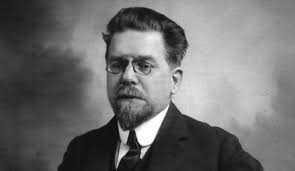
Władysław Stanisław Reymont (right. Claim) – He was born 7 V 1867 r. in the village of Kobiele Wielkie near Radomskie, died 5 XII 1925 r. in Warsaw. He was the son of a rural organist. He spent his early childhood in Tuszyn. He was a tailor student. W 1883 of the year he obtained a certificate from the 3rd class of the Warsaw Niedzielaści-Wielkopolska School. W 1884 r. He was liberated to the journeyman. Later to a year 1887 He performed in traveling acting corpses (pod ps. Urban). From 1888 r. He worked on the Warsaw-Vienna Railway. In December 1893 r. He moved to Warsaw and dealt only with literary work. W 1895 r. He went to Italy. He traveled a lot. Visited Berlin, Brussels, London and Paris. W 1900 r. In the railway disaster near Warsaw, a serious injury. W 1902 r. He married Aurelia from Szabłowska and went to France. During the revolution 1905 r. and World War I stayed mainly in Warsaw. W 1917 r. otrzymał za Peasants nagrodę Polskiej Akademii Umiejętności. W 1919 i 1920 r. visited the clusters of Polonia in the United States. W 1920 r. He bought the Kołaczkowo farm near Września (Currently there is the Reymont Museum). He was very interested in the film and was one of the co -founders of the first Polish Cinematographic Cooperative. W 1924 r. otrzymał Nagrodę Nobla za Peasants. He was buried at the Powązki Cemetery in Warsaw. His heart was embedded in the pillar of the church of St.. Cross in Warsaw.
The writer debuted in December 1892 r. At the same time as a publicist (korespondent terenowy warszawskiego “Voice”) i nowelista w krakowskiej “Thinks” (nowelą Christmas Eve). His first novels and stories described “peasant existence” and the life of the urban environment, noble, acting and railway. In accordance with his philosophy of nature and nature in the works of this period, he also expressed his belief, that natural life is authentic, so positive, and urban life is unnatural, that is, inactive, so negative. Reymont also showed human loneliness among people in the city. Of r. 1900 His work included works related to the revolution and songs containing psychological and parapsychological elements. During World War I, Reymont created several stories, in which he presented the experiences of victims and participants of the war in the Polish countryside. They belong to the most famous works of this writer: novel – Peasants, Komediantka, Fermenty, reportage – Pilgrimage to Jasna Góra, Promised land oraz opowiadania – Court, Ave homeland, Storm i Longing.